
By Coral Quering
Hidden under rocks and logs, within streams, and in crevices along bluffs, lies a world of fantastic and ecologically essential biodiversity that goes all too often unnoticed. The Southern Appalachian region, which includes the Tennessee River Gorge, is the global hotspot for salamander biodiversity. Salamanders are amphibians, meaning that they generally grow from egg to aquatic larva to a semi-terrestrial adult. People often mistake salamanders for lizards due to their similar body shape and structure, but salamanders have adapted to specialize in aquatic and semi-aquatic habitats where lizards are fully terrestrial and can survive much better on dry land.
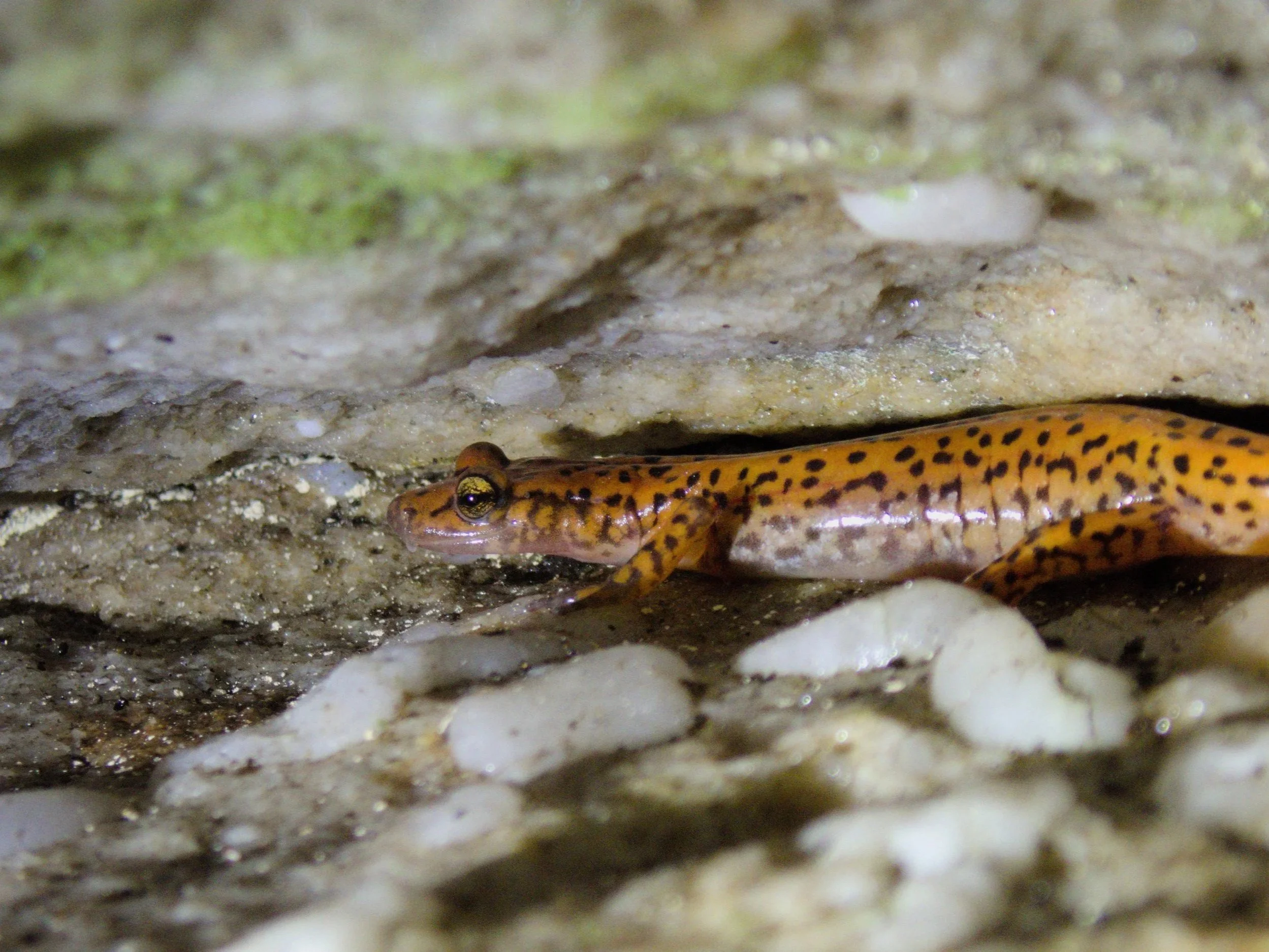
Cave salamander (Eurycea lucifuga).
Photo credit: Coral Quering.
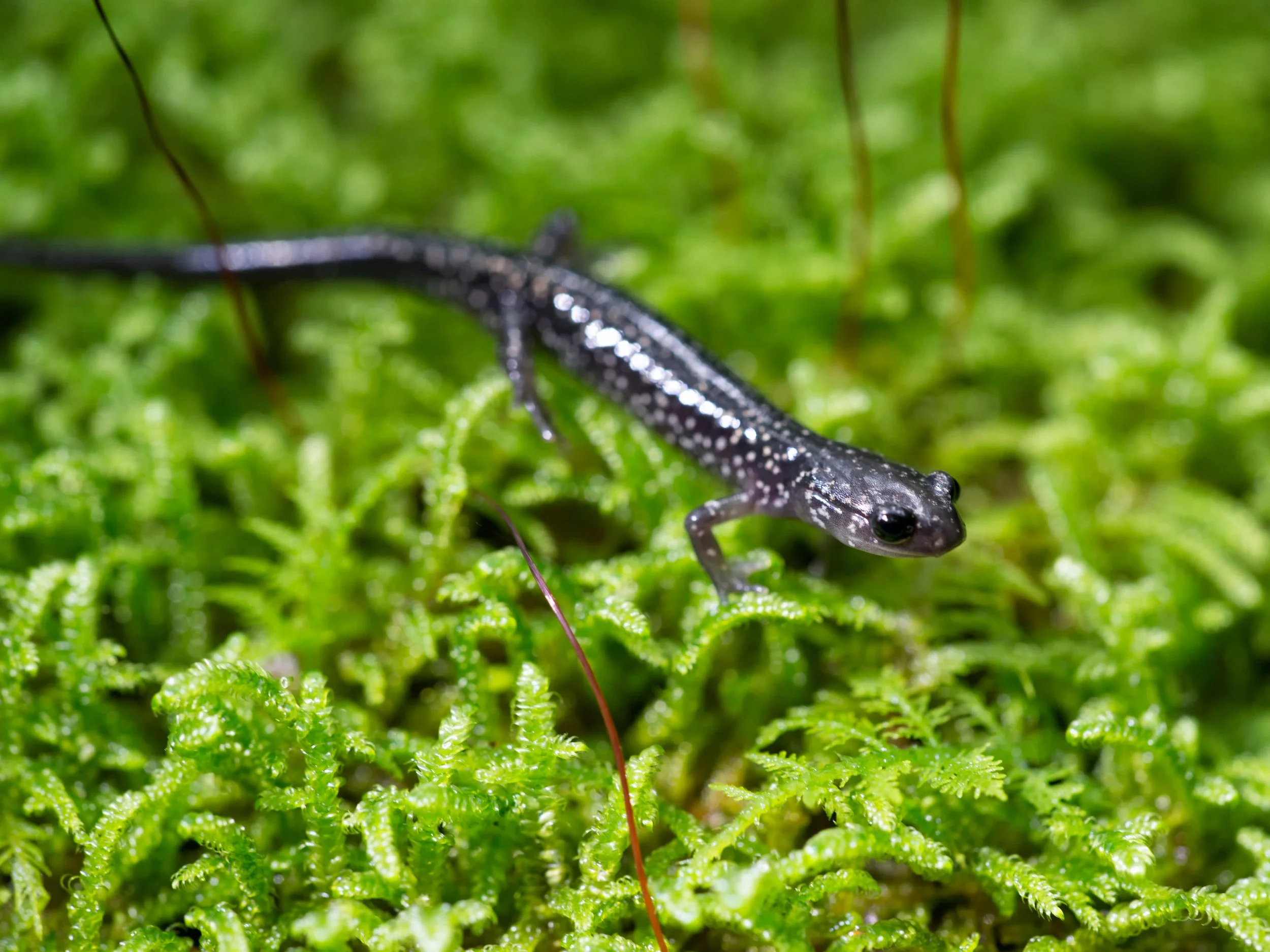
Northern slimy salamander (Plethodon glutinosus).
Photo credit: Kevin Livingood.
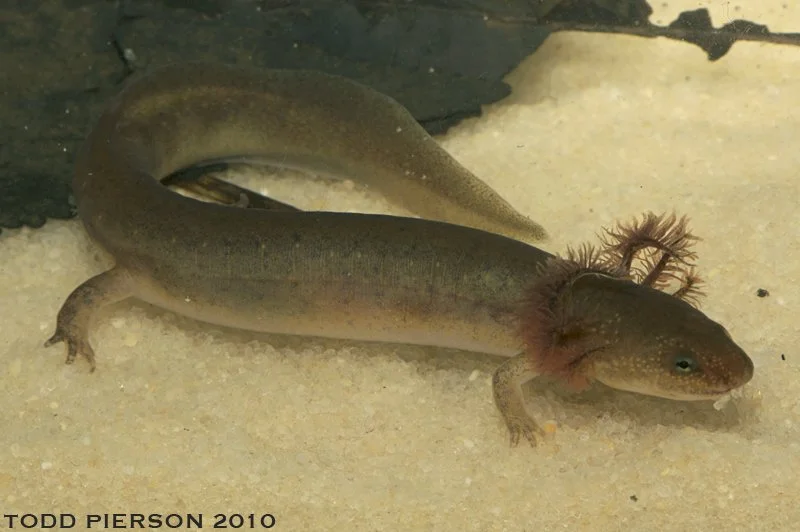
Larval red salamander (Pseudotriton ruber) with gills.
Photo credit: Todd Pierson.
One of the most fascinating physiological traits of salamanders is their ability to breathe through different respiration mechanisms, including their lungs, gills, and their permeable skin. Interestingly, species in the family Plethodontidae, the most abundant and diverse group in the Southeast United States, are entirely lungless. Larval salamanders in this group have feathery external gills which aid in respiration. As larvae mature, they lose their gills, recycling the tissue into their bodies, relying solely upon their skin for respiration as adults. Because of this mechanism of skin-breathing, salamanders can be very sensitive to environmental pollutants and have been proposed as an indicator for overall ecosystem health (Jung et al., 2004).
Within their habitats, salamanders function as predators of insects and other small invertebrates and are themselves a major food source for other animals including turtles, snakes, birds, and crayfish (Davic & Welsh, 2004). Salamanders that migrate to breed have also been documented as dispersal vectors, transporting seeds as well as mussels and fairy shrimp between wetlands (Davic & Welsh, 2004; Lowcock & Murphy, 1990). Although salamanders are seldom seen if they’re not searched for, they can be extremely abundant. One study at a site in New Hampshire estimated there to be nearly three thousand salamanders per two and half acres of forest, with their total biomass equaling twice that of birds in the area (Burton & Likens, 1975).
Despite their abundance and ecological significance, many salamander species are facing population declines. In fact, amphibians as a group are considered the most threatened group of vertebrates globally, with 40.7% of species considered threatened in a 2023 report (Luedtke, 2023). Salamanders face an elevated threat, with an estimated 60% of species threatened globally (Re:wild et al., 2023). Common threats to salamander species include habitat fragmentation by agricultural and urban development of land, effects of climate change, and emergent pathogens including the fungus Batrachochytrium salamandrivorans (Luedtke, 2023). Actions to help safeguard salamanders from these threats include supporting sustainable urban development, moving towards agricultural practices that limit fertilizer runoff and other impacts on the surrounding environment, and supporting the protection of undeveloped land. Land trusts, like TRGT, state and national parks, professional ecologists, and policymakers all play vital roles in protecting local habitats and the flora and fauna that inhabits them. By supporting sustainable development and protection of our lands, we can conserve our natural resources for future generations.
Perhaps the most vital way to bring awareness to conservation issues is simply by building a personal relationship with the biodiversity that surrounds us. Over 50 species of salamanders are native to Tennessee, and 15+ species have been observed on TRGT properties alone. Here are just a few of the species that can be observed while exploring TRGT’s public access hiking trails.
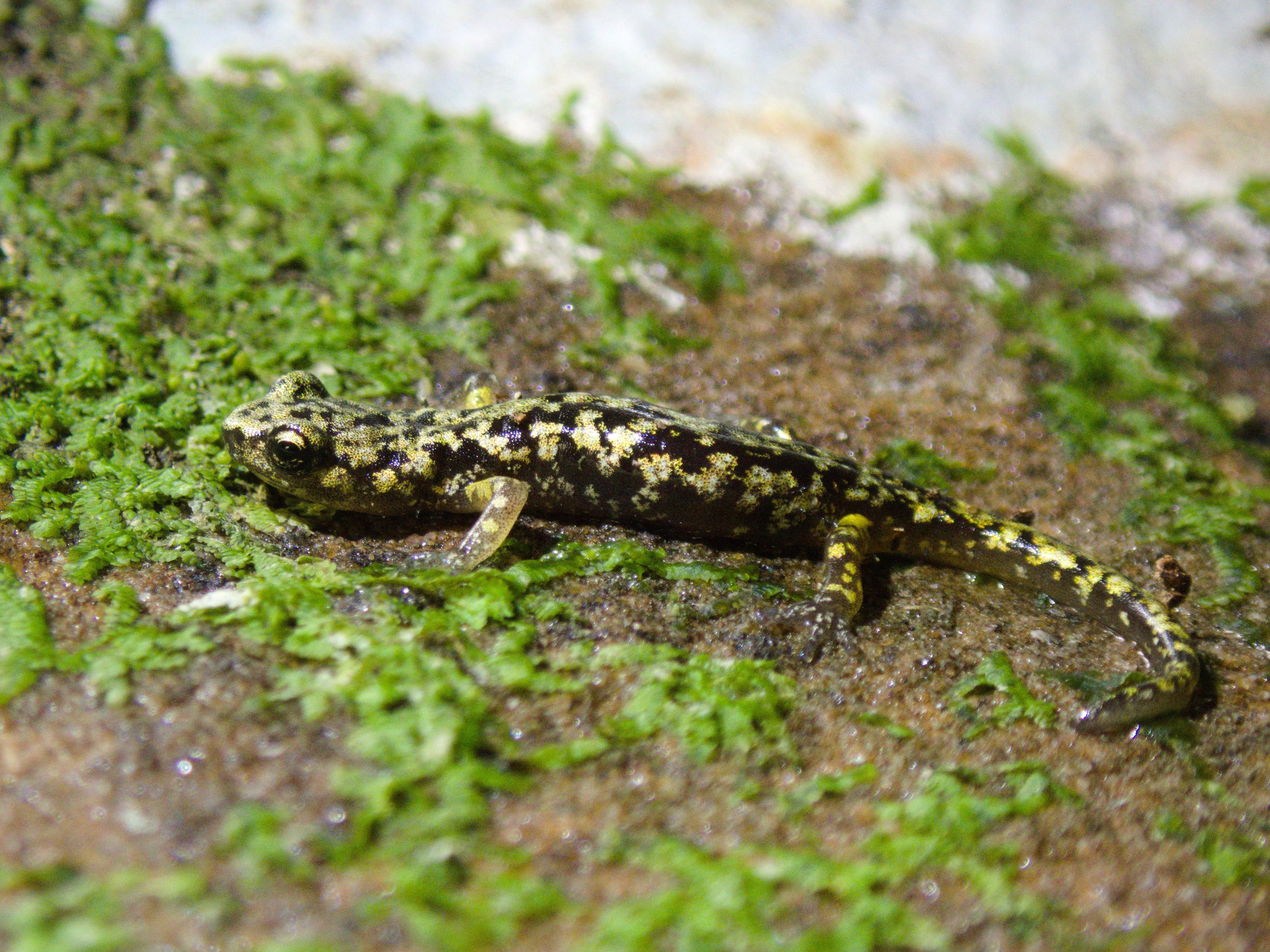
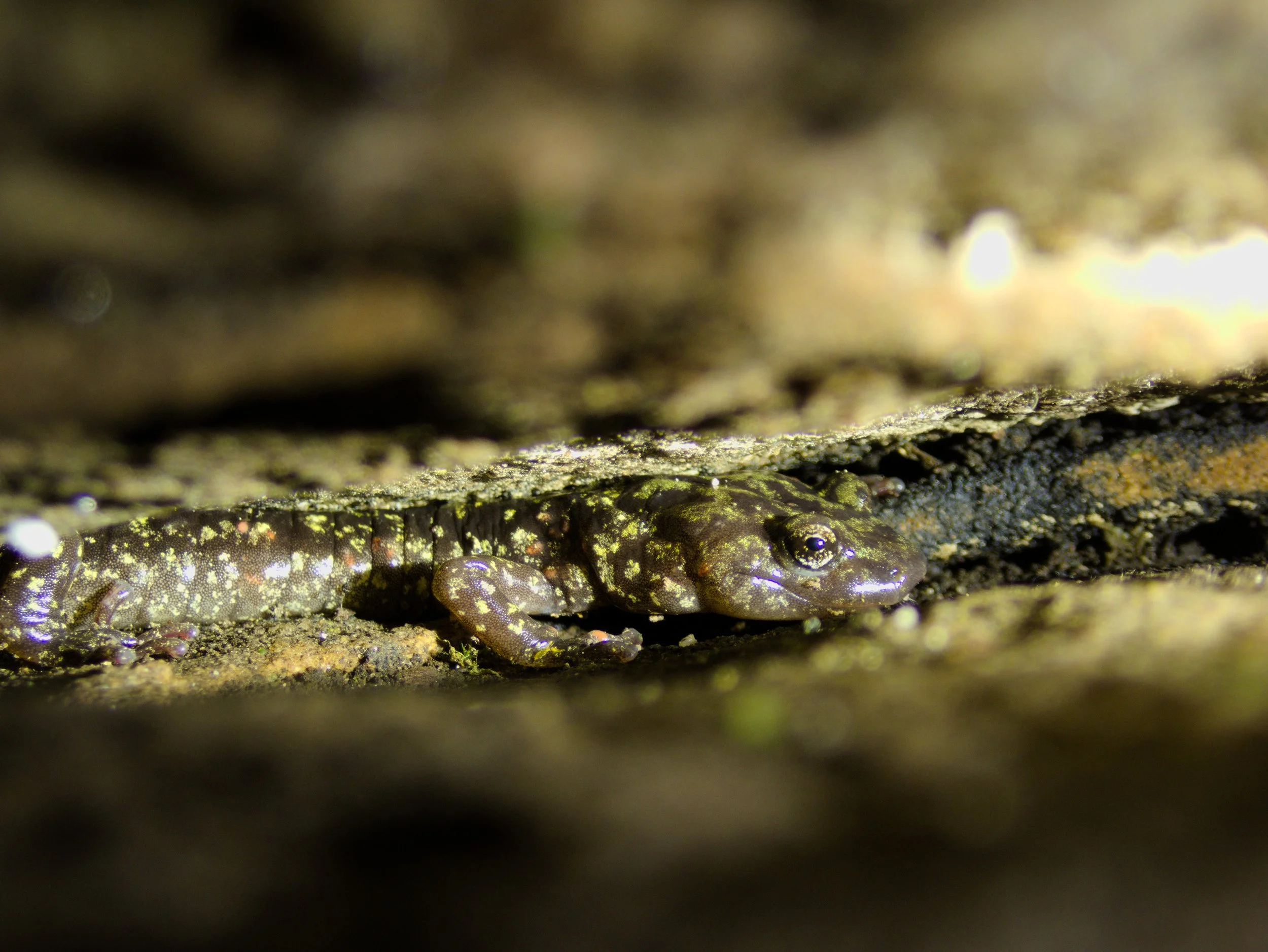
One unique species that resides in the gorge is the green salamander (Aneides aeneus), which can be readily identified by its striking green coloration which helps it blend in with moss and lichen. The green salamander is an excellent climber that specializes in using rock crevices and tree bark as its preferred habitat. When females lay their eggs in the spring, they will fiercely guard them until they hatch about three months later (Gordon, 1952). Photo credit: Coral Quering.
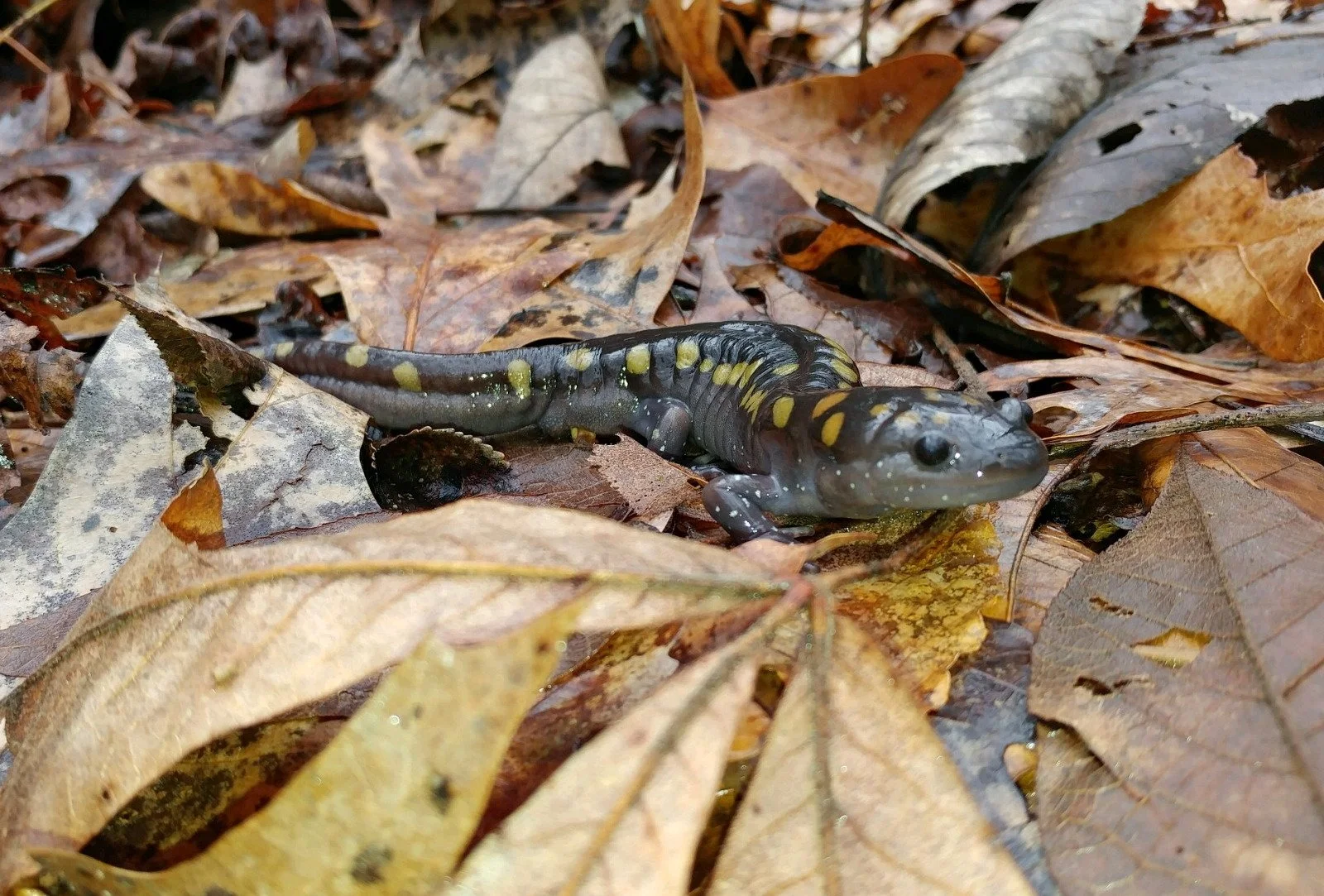
The spotted salamander (Ambystoma maculatum) is a fossorial species, meaning that it spends most of its time in burrows underground. In the spring, spotted salamanders emerge in great numbers and migrate to wetland pools to breed. Some cities have events where volunteers help spotted salamanders and other amphibians safely cross roads to reach breeding sites. Photo credit: Rob Ritchie.
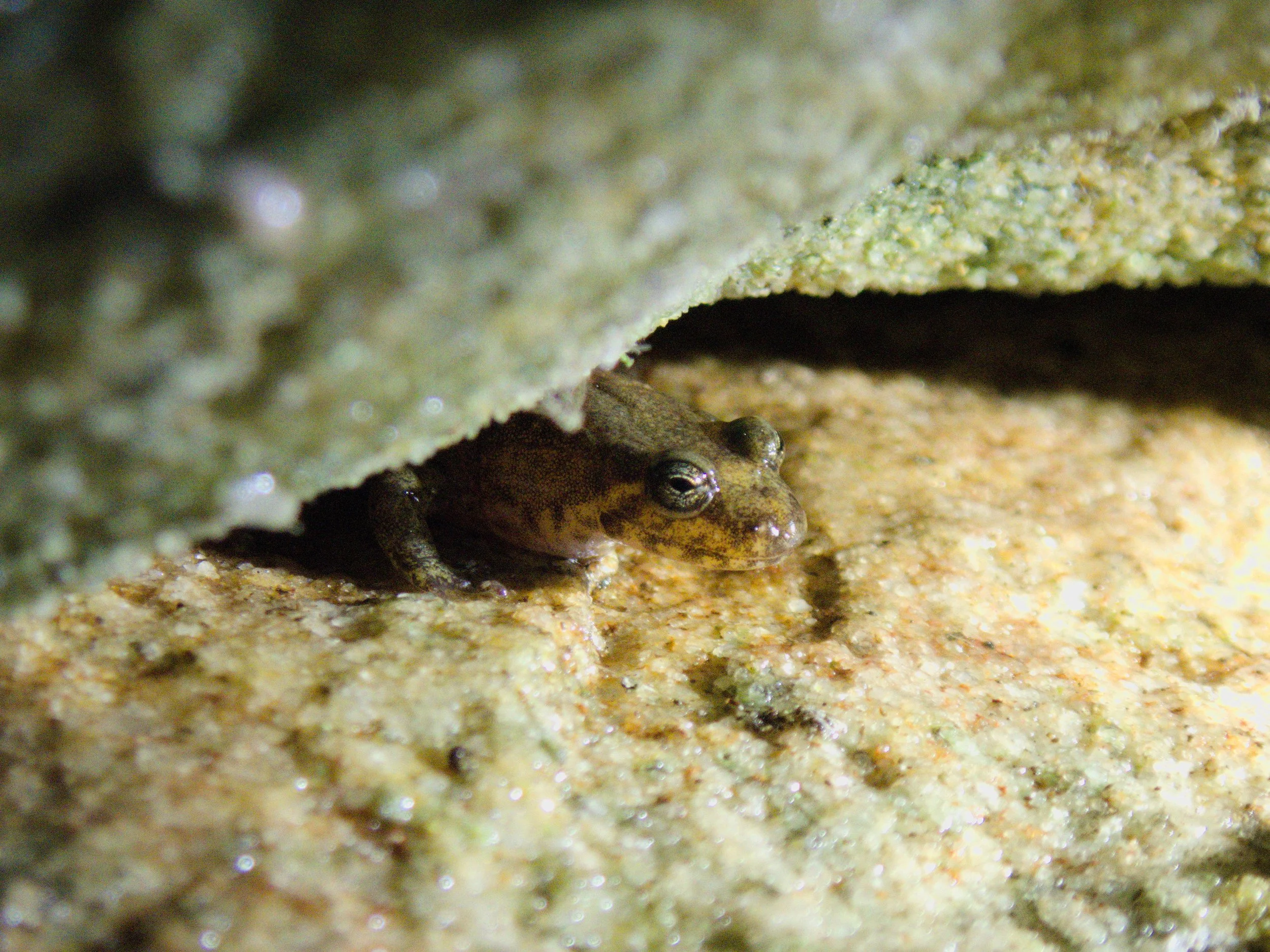
A common salamander to encounter in small streams is the spotted dusky salamander (Desmognathus conanti). This species and other dusky salamanders (genus Desmognathus) represent how much biologists are still learning about some salamander groups. There are over 30 species of dusky salamanders currently recognized, but almost all of them look extremely similar. Scientists are using DNA sequencing to better understand how many species there are within this group and how they are related. It’s very likely that a few years from now we may learn that some groups we currently consider separate species should be grouped back together while other current species should be split into two or more species. Photo credit: Coral Quering.
If you hope to see these and other amphibious residents of the Tennessee River Gorge in person, here are a few things to keep in mind:
1. Don’t trespass. When looking for salamanders, make sure to remain on publicly accessible land or in areas where you have explicit landowner permission. Online you may find that people have posted locations where they’ve seen various species, but that does not mean that all of those locations are open to the public.
2. Don’t disturb the habitat. Looking beneath rocks and logs can be a great way to find snakes and salamanders, but care must be taken to avoid disturbing these microhabitats. In terrestrial environments, these materials foster moist conditions that amphibians and invertebrates rely on, and in stream and wetland habitats they provide shelter to the eggs and young amphibians and fish. Take care to always place back cover materials in exactly the position you find them in.
3. Minimize animal stress. There is a delicate balance between being able to appreciate local fauna and causing undue stress. In general, all interactions with wild animals should be limited. Skin-to-skin contact with amphibians should be avoided because their permeable skin can absorb oils and components of skincare products from our hands which can be harmful to them. It is best practice to handle amphibians indirectly with gloves or plastic bags. If you must handle an amphibian directly (for example, helping a salamander across a road or trail), harm can be minimized by first wetting your hands and rubbing them in the dirt and leaf litter.
4. Be safe around snakes. Snakes are often found in similar habitats to salamanders. It’s good practice to learn to identify venomous snakes in any area you plan to hike in, and to keep your distance from any snake unless you are trained in proper handling. Even non-venomous snakes can have a powerful bite.