
Bird Banding
"Those little nimble musicians of the air, that warble forth their curious ditties..." — Izaak Walton


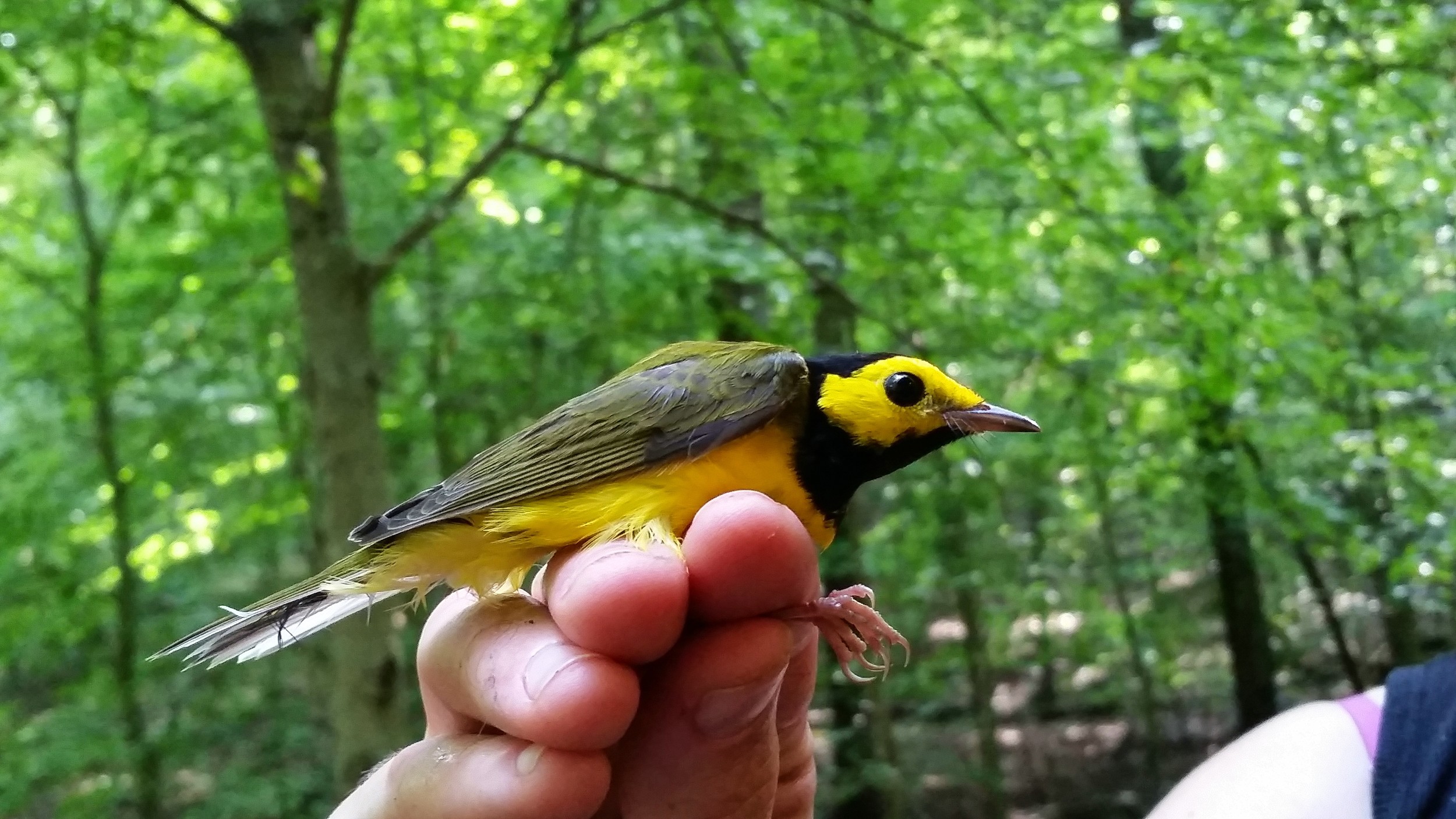
Few groups of birds animals match birds for diversity, charisma, and ecological signal strength. They’re detectable, behaviorally varied, and reliable gauges of environmental health. Every day in the field studying birds adds data that guides land-protection decisions and contributes to hemispheric-level conservation. Since launching the TRGT Bird Observatory in 2014, we’ve run spring and fall mist-netting (bird banding) operations. Fine-mesh nets let us gently capture migrants and residents to document species diversity, understand bird behavior, and measure the Gorge as a migratory refueling stop. Each bird gets a unique aluminum leg band while we take a series of measurements. Top migrants: Swainson’s, Gray-cheeked, and Wood Thrushes, Hooded and Magnolia Warblers—all gaining or holding mass here, proving the Gorge is a legit pit stop (Figure 1).
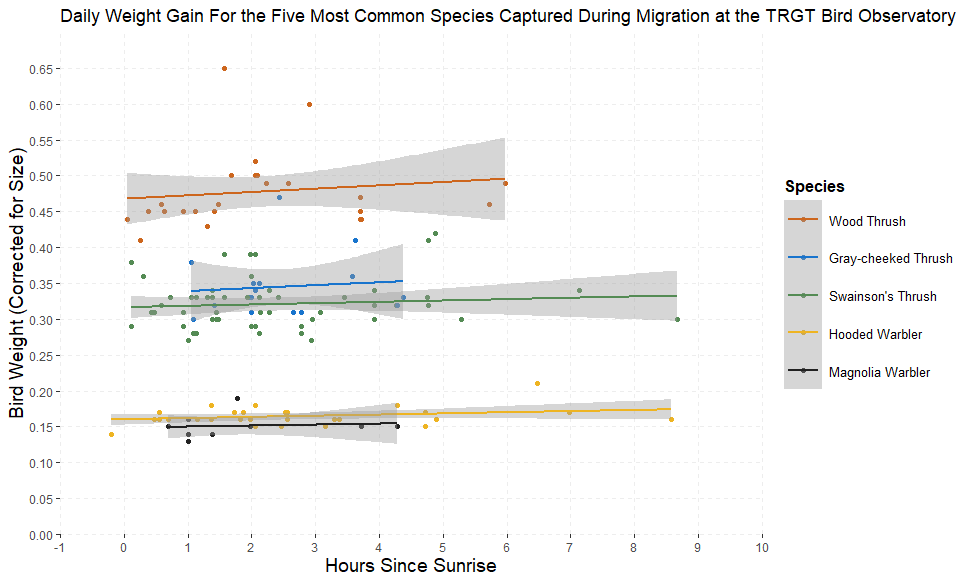
Figure 1. A graph showing the size-corrected weight of an individual bird as a function of the time of day, expressed in hours since sunrise, at the TRGT Bird Observatory during autumn migration. There are five species represented, each with its own data point color. A regression line for each species shows the trend of the data. The gray shading around each trendline represents the 95% confidence interval. The most important takeaway here, is that each line generally trends upward. This means birds captured later in the day expressed greater mass. Since these birds are known to be migrating birds, it follows that if birds are heavier later in the day then they are successfully getting food and water throughout their time at the Bird Observatory. In this context, a trendline with a positive slope is a reliable indicator that the migrant bird species represented here are able to successfully maintain and gain the necessary energy stores to power their migration movement.
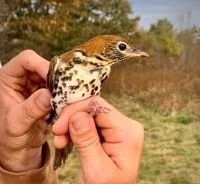
Wood Thrush
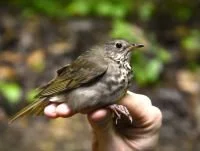
Gray-cheeked Thrush
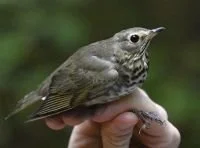
Swainson’s Thrush
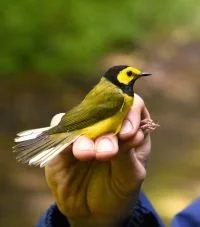
Hooded Warbler
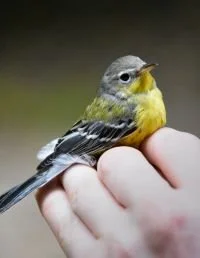
Magnolia Warbler
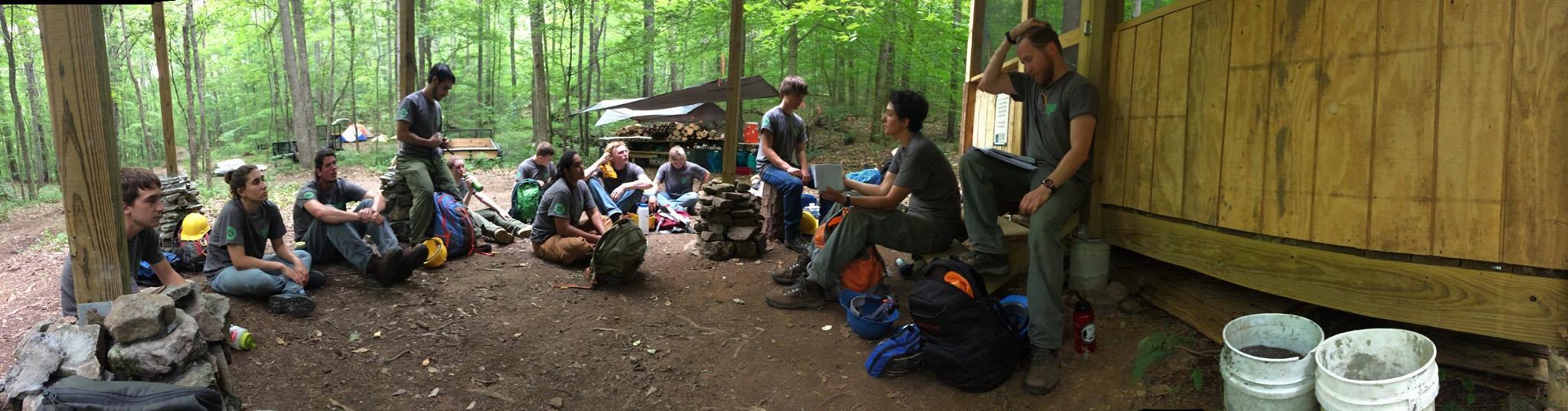
Would you like to visit the Bird Observatory or volunteer to help the bird researchers? Here are a few things to consider when Visiting the Bird Observatory
More in Bird News




The final count for the 2018 bird banding season is here!